Marketing 
If you run a small business, you probably know you “should” have a website—but you might not be sure how to turn that website into actual leads and customers. A no-code website for small business lead generation is a practical way to bridge that gap, even if you have no technical skills and a limited budget. Instead of treating your site like an online brochure, you can treat it like a simple, always-on sales assistant that collects contact details, qualifies prospects, and books conversations for you.

In this guide, you will see what makes a no-code lead generation site different from a typical small business website, which tools you actually need, and how to design pages, forms, and popups that convert. We will also look at how to connect everything to your CRM and email tools, and how to track and improve results over time so your site brings in steadily better leads. If you are interested in more focused funnel pages, you may also want to explore how a dedicated landing page builder can support this kind of setup, or how a broader AI website builder fits into your overall marketing stack.
## What a No-Code Lead Generation Website Means for Small Businesses
Many small business websites are essentially digital business cards. They list services, share a bit of background, maybe show some photos, and include a generic “Contact us” page. These sites can help people verify that you exist, but they rarely push visitors to take a next step. A no-code website for small business lead generation is built around a different question: “What do I want visitors to do right now, and how do I make that as easy as possible?”
On a basic informational website, you usually see a home page with a broad message, a few service pages, an about page, and contact details buried in the footer or a separate contact page. There might be several different links and distractions on every page, from social icons to blog archives. In contrast, a focused lead generation website is organized around clear calls to action, such as “Book a free consultation,” “Request a quote,” or “Get a price estimate in 60 seconds.” Forms are placed prominently, often above the fold on key pages, and repeated in logical places throughout the site so there is always a visible next step. Instead of being passive, the whole experience is designed to guide a visitor from curiosity to commitment.
This lead focus matters because visitors do not spend much time deciding. Various studies show that website visitors form an opinion in milliseconds and often leave within seconds if they do not see value quickly. When you have a sharp message and a clear action button, you give them a reason to stay just long enough to convert. That is why landing pages that focus on a single offer tend to convert better than generic pages. One [HubSpot analysis](https://blog.hubspot.com/marketing/landing-page-stats) found that the average landing page conversion rate across industries is around 5.9%, and many small businesses are far below that simply because their sites are not set up to capture leads.
For small businesses, the “no-code” side is just as important as the “lead generation” side. Hiring a developer or agency to build a custom site can easily run into thousands of dollars, and every small change—like tweaking a headline or testing a new form—requires another request and sometimes another bill. A no-code website builder lets you make those changes yourself with drag-and-drop tools, pre-built templates, and simple integrations. This is especially useful when you are moving quickly, testing offers, or working with a small marketing budget. When you can update your own pages and forms in minutes, you are much more likely to keep your website aligned with your current priorities and to experiment with new landing page ideas.
There are some situations where hiring a developer or agency still makes sense, like when you need complex custom features or tight integration with in-house systems. But for most small business lead generation needs—service descriptions, lead capture forms, booking widgets, and basic automation—a no-code builder is usually a better fit. It reduces up-front costs, shortens timelines from months to days, and makes ongoing improvements realistic for a small team. If you later decide to expand into more sophisticated experiences, you can often layer additional tools on top of the same foundation, rather than starting over.
The specific goals you set for your no-code lead gen site will depend on your type of business. Local service providers, such as plumbers or consultants, usually care about getting people to call, book an appointment, or request a quote. Ecommerce businesses might focus on email signups and first orders. Many B2B businesses want demo requests or discovery calls. A [Growth List round-up](https://growthlist.co/lead-gen-statistics/) noted that roughly a quarter of small businesses do not even know their lead conversion rate, which means they are probably not using their site strategically. When you define simple goals like “10 quote requests per week” or “20 new email subscribers per month,” your no-code website becomes a tool you can actually measure and improve, not just a box you checked years ago.
To make these differences more concrete, it helps to compare a typical “brochure” website with a focused no-code lead generation website side by side.
| Aspect | Typical Small Business Site (Brochure) | No-Code Lead Generation Site |
|------------------------------|-----------------------------------------------------------------------------------|-----------------------------------------------------------------------------------|
| Main purpose | Provide basic information and contact details | Capture leads and start sales conversations |
| Primary call to action | Generic “Contact us” link, often only on one page | Clear, specific CTAs like “Get a quote” or “Book a free consultation” on key pages |
| Lead capture placement | Single contact form buried on a separate page | Short forms or booking widgets placed above the fold and repeated strategically |
| Update and testing process | Requires developer or agency for most changes | Business owner or marketer edits pages and tests ideas using no-code tools |
| Measurement and improvement | Little or no tracking beyond total visitors | Simple lead goals, tracking of conversion rate, and regular content tweaks |
When you look at your own site through this lens, it becomes easier to see where you are closer to the left column and what you might change to move toward the right. If your marketing also relies heavily on paid ads or social media, you can connect this thinking to a dedicated landing page builder approach and create separate campaign-specific pages that plug into the same no-code infrastructure.
## Essential Features of a No-Code Website for Small Business Lead Generation
Once you think of your site as a lead engine rather than a brochure, you can see which features really matter. A no-code website for small business lead generation does not need to be complex, but it does need a few essentials working together: clear messaging, trust, easy ways to respond, and simple tools to organize what comes in.
On each key page, your first job is to make your value proposition obvious. Visitors should be able to understand in a sentence or two who you help, what you do for them, and why you are a good choice. Headlines like “Stress-free bookkeeping for busy freelancers” or “Same-day AC repair in Austin, guaranteed” tell people immediately whether they are in the right place. Under that, a short subheading can add a concrete benefit or time frame. Many high-converting landing pages studied by [Unbounce](https://unbounce.com/blog/) and others follow this simple pattern of headline plus supporting explanation.
Right next to that message, you want a clear call to action and an easy way to respond. That usually means a visible button that leads to a form or booking widget, or even an embedded form above the fold. The form itself should be short and focused. Name, email, and one or two key details (like service needed or preferred time) are often enough to start a conversation. You can ask more questions later by phone or email. When forms are too long or confusing, people simply abandon them and your no-code website for small business lead generation ends up underperforming.

Trust signals fill the gap between “This sounds good” and “I am willing to share my details.” For a small business, that can be testimonials with names and photos, star ratings from Google or Yelp, logos of recognizable clients, or mentions of certifications and guarantees. According to various small business website studies, adding social proof like reviews is strongly associated with higher conversions; one 2025 compilation of small business website stats reported that sites using video tend to see noticeably higher engagement and conversion than those without, suggesting that richer proof builds confidence ([source: Marketing LTB](https://marketingltb.com/blog/statistics/small-business-website-statistics/)). You do not need fancy production values—a simple customer quote with a headshot and a short video walkthrough of your process can go a long way.
As your traffic grows, more advanced elements like multi-step forms and targeted popups can help you capture leads that would otherwise slip away. Tools similar to Growform or OptinMonster are built around this concept. A multi-step form breaks a longer questionnaire into small, easy steps. The first screen might just ask for a ZIP code and what service someone needs, and the second asks for contact information. Because people have already invested a little effort, they are more likely to complete the form. Many form tools report significantly higher completion rates when using multi-step layouts compared to a single long form, and landing page stats from platforms like Unbounce show that reducing friction at each step can drive meaningful gains in signups.
Popups and slide-ins, when used thoughtfully, can also increase the number of leads your no-code website captures. For example, a time-delayed popup might offer a “Free 10-point roof inspection checklist” in exchange for an email address on a roofing site. An exit-intent popup can appear when someone moves their cursor toward the browser’s close button, offering a last-chance discount or a short quote form. While poor popups can be annoying, well-timed ones can convert visitors who were interested but not quite ready to take the main action. Here, borrowing patterns from specialized landing page builder guides can be helpful, since those tools are often built around disciplined popup and form testing.
Real-time tools like chatbots add another layer of responsiveness. No-code chatbot platforms such as Chatling, Landbot, or similar tools let you add a chat widget that can answer common questions and collect contact details without you having to sit at your computer. If someone asks for pricing information at 10pm, the bot can reply with a general range and then ask if they would like a personalized quote. When they say yes, it can ask for their email and a few details, then send that lead straight to your inbox or CRM. Tutorials from chatbot providers and conversational design case studies show that these bots can significantly increase engagement on key pages because they meet visitors where they are, in conversational form, rather than asking them to hunt for the right link.
The important thing is not to add every possible feature, but to add just enough to make it easy for visitors to say “yes” in whatever way feels most natural to them. Some will prefer a form, some a chat, and some a phone call. A well-designed no-code website for small business lead generation makes all of those paths visible and collects whatever information you need to follow up quickly and professionally.
## Step-by-Step: Building Your No-Code Lead Generation Website
If you are starting from scratch—or overhauling a site that is not working—it helps to follow a simple sequence. The process is less about technical skill and more about making clear decisions up front so you do not get stuck tweaking colors for weeks.
The first step is choosing a no-code builder that fits your budget and must-have features. Many small businesses do well with all-in-one platforms that combine pages, forms, email, and basic CRM in one place. Others prefer a dedicated landing page tool like [Unbounce](https://unbounce.com/) combined with a separate CRM or email service. When you evaluate options, think practically: Can you create pages using drag-and-drop? Are there templates for service businesses or lead capture? Does it integrate with the CRM or email tool you already use? And does the monthly cost make sense given your traffic and revenue? For a small local business with only a few offers, picking a simpler tool that you will actually use is often better than choosing an enterprise-grade platform you find overwhelming.
Once you have a builder, you can plan a basic site structure. For a focused no-code website for small business lead generation, you do not need dozens of pages. A straightforward structure usually includes a home page, one or more dedicated landing pages, and a thank-you page or confirmation page for each form. The home page acts as a hub, giving a clear overview of what you offer and directing visitors to the main calls to action, such as “Get a free quote” or “Book a consultation.” Landing pages focus on specific offers or audiences. For instance, a landscaping company might have separate landing pages for “monthly lawn care packages” and “one-time garden design,” each tailored to that audience. Thank-you pages serve two purposes: they confirm that the form worked, and they give you a chance to suggest a next step, such as downloading a guide, watching a short video, or following you on social channels.
A simple real-world example might be a small accounting firm that used to have a generic site listing all services. When they switched to a no-code builder, they created a home page that explained, in plain language, that they help freelancers and small agencies simplify bookkeeping and taxes. Then they added two key landing pages: one for monthly bookkeeping packages and another for annual tax filing. Each page had a simple “Get a custom quote” form and a clear list of what was included. They also set up a thank-you page that explained what would happen next and offered a short checklist to prepare for their call. Within a few months, they were able to see which page generated more inquiries and adjust their pricing and messaging accordingly.
After mapping pages, you can set up the core elements that capture and route inquiries. In your builder, create forms for your main actions: quote requests, consultations, and email signups. Configure each form to send submissions somewhere useful: to your email inbox, your CRM, or both. If you use chat widgets or chatbots, add them to key pages like your home page and landing pages and decide what questions they should ask before handing off a conversation. Many no-code platforms also let you set up simple automations, such as sending an automatic confirmation email whenever someone completes a form, or assigning new leads to a specific team member based on what service they selected.

Routing inquiries properly is one of the biggest differences between a casual site and a serious lead generation setup. In a casual setup, form submissions might gather in an inbox that nobody checks regularly. In a more deliberate setup, each new lead is tagged, logged, and given a clear owner. The same [lead gen stats](https://growthlist.co/lead-gen-statistics/) that highlight how many small businesses lack visibility into their conversion rates also point out that speed of follow-up has a major impact on closing deals. A basic rule of thumb is that responding within an hour is far better than waiting a day or two; the right no-code automations make that kind of responsiveness feasible, even for small teams.
Because this is a guide-style topic, it helps to summarize the build process as a simple checklist you can follow or adapt to your own situation.
1. Define one or two primary goals for your website, such as “get quote requests” or “book consultations.”
2. Choose a no-code website builder that fits your budget, integrates with your tools, and feels easy enough that you will actually use it regularly.
3. Map a lean site structure with a focused home page, one or more offer-specific landing pages, and clear thank-you pages.
4. Create short, purpose-driven forms or booking widgets and place them prominently on relevant pages instead of hiding them on a single contact page.
5. Connect your forms and chat widgets to your CRM or email tool so every new lead is captured, tagged, and sent to the right person.
6. Set up at least one simple automation, such as an instant confirmation email and an internal notification for each new inquiry.
7. Test the full flow from a visitor’s perspective, from first click to thank-you page and follow-up email, fixing any friction you notice.
Using this checklist as a rough roadmap keeps you moving forward in a straight line instead of getting lost in details like font choices and button shapes before the basic lead flow is working. Later, if you decide to add more advanced capabilities—like AI-assisted page creation or dynamic content—you can explore how an AI website builder layers on top of the same structure without throwing away what you have already built.
## Designing Pages, Forms, and Popups That Convert Visitors into Leads
Once the structure is in place, design decisions determine how many of your visitors actually convert. The good news is that you do not need to guess what works; tools like Unbounce have published years of landing page data and best practices that you can adapt to your no-code website for small business lead generation.
Effective landing pages tend to have a few things in common: a focused headline, one primary call to action, minimal distractions, and content that addresses the specific questions and objections of the visitor. If you try to promote every service you offer on a single page, you dilute your message and make it harder for visitors to decide what to do. It is usually better to pick one service or offer per page and write a headline that speaks directly to the outcome your target reader wants. For example, “Book more qualified jobs with done-for-you Google Ads management” is clearer than “Digital marketing solutions.”
Below the headline, you can add short sections that explain who this is for, what is included, and what results they can expect. Testimonials and before/after examples help bring these promises to life. Many marketers see higher conversion rates when they simplify navigation on landing pages, removing top menus and extra links that pull people away from the main action. A [HubSpot landing page report](https://blog.hubspot.com/marketing/landing-page-stats) noted that about a third of marketers saw higher landing page conversion rates in 2023 compared to the year before, in part because they focused more on clarity and testing small changes rather than redesigning everything at once. These same habits translate directly to any no-code website for small business lead generation.
Form design is a critical piece of this puzzle. People are more likely to start a short, simple form than a long, detailed one. If you need to collect more information to give an accurate quote, consider using multi-step forms. The first step might ask for only one or two easy pieces of information, such as “What service do you need?” and “When do you need it?” Once they click “Next,” you can gently ask for name and contact details, and finally any optional questions that help you qualify the lead. This approach leverages the “foot in the door” effect: once someone has started, they are more inclined to finish. Many form tools and CRO studies report double-digit lifts in completion rates when long forms are broken into logical steps, which is significant when every lead is valuable.
Popups and slide-ins can be designed in the same user-friendly way. Instead of interrupting visitors the moment they arrive, set popups to appear after a reasonable delay or on exit intent. You might offer a valuable resource in exchange for an email, like a homeowner’s maintenance checklist, or a small incentive, like a 10% discount on a first service. On product or pricing pages, a slide-in offering “Have questions? Ask us” can encourage people to start a chat or request a callback. Tools similar to OptinMonster have shown through user case studies that targeted campaigns—aimed at specific pages or behaviors—generally perform better than generic, site-wide popups because they feel more relevant and less intrusive.
A practical way to design for conversion is to walk through your own pages as if you were a first-time visitor. Ask yourself: Is it obvious what this business does and who it serves? Do I know what I am supposed to do next? If I am interested but not ready to commit, is there a softer option, like downloading a guide or asking a question? By adjusting headlines, cleaning up layouts, and refining forms and popups based on these questions, you can gradually turn your no-code website for small business lead generation into a consistent source of inquiries. If you want a deeper dive on the page-level details, pairing this with a dedicated guide to landing page builders can help you make even more focused improvements.
## Connecting Your No-Code Site to CRM, Email, and Support Tools
A lead is only as valuable as your ability to follow up. That is where integrations come in. A strong no-code website for small business lead generation does more than collect emails; it feeds them into systems that help you track, nurture, and serve those leads over time.
Integrating your forms and chatbots with a CRM is one of the most impactful steps you can take. When a visitor fills out a quote form or asks a question in your chat widget, those details can be sent directly to your CRM, where a new contact is created, tagged with the source (for example, “Website – AC repair form”), and assigned to the right person on your team. This means you can see at a glance how many leads are coming from your site, which services they are interested in, and where they are in your pipeline. Over time, you can identify patterns such as which landing pages produce the most closed deals, not just the most form fills.
Email marketing connections add another layer of leverage. When someone submits a form, you can automatically add them to a specific email list or segment and trigger one or more automated messages. That might start with a simple confirmation email letting them know you received their request and when to expect a reply. From there, you could send a short sequence of helpful emails that answer common questions, share case studies, and remind them to schedule a call if they have not already. Research from providers like [Mailchimp](https://mailchimp.com/resources/email-marketing-statistics/) and others shows that timely follow-up emails after a signup or inquiry tend to have high open and engagement rates, and they help keep your brand top-of-mind while a prospect is deciding.
For businesses that provide ongoing service or support, linking your website to shared inboxes or help desk tools keeps everyone aligned. If a customer submits a support request through a form on your site, that message can create a ticket in your help desk system. If that same person later fills out a form asking about an upgrade, your sales team can see their support history and respond with appropriate context. This shared view of each lead and customer reduces dropped balls and prevents people from having to repeat themselves when they talk to different team members.
The technical side of these integrations is usually simpler than it sounds, especially with modern no-code builders. Many platforms have direct connections to popular CRMs and email tools, or you can use an automation service like [Zapier](https://zapier.com/) or [Make](https://www.make.com/) to connect them without writing code. The key is to decide on a basic workflow: which form goes to which list or pipeline stage, who gets notified, and what happens next. Once that logic is in place, your website shifts from being a passive entry point to an active participant in your lead management process. If you are already exploring how an AI website builder fits into your stack, think about these integrations early so you do not have to rewire everything later.
## Tracking, Testing, and Improving Lead Generation Results
The last piece of the puzzle is measurement. If you do not track how your no-code website is performing, you will fall into the trap mentioned earlier: running a site without any idea of your conversion rate. That is common—one study cited in the [Growth List lead generation statistics](https://growthlist.co/lead-gen-statistics/) found that about 25% of small businesses are unaware of their lead conversion rates—but it is avoidable with a bit of setup.
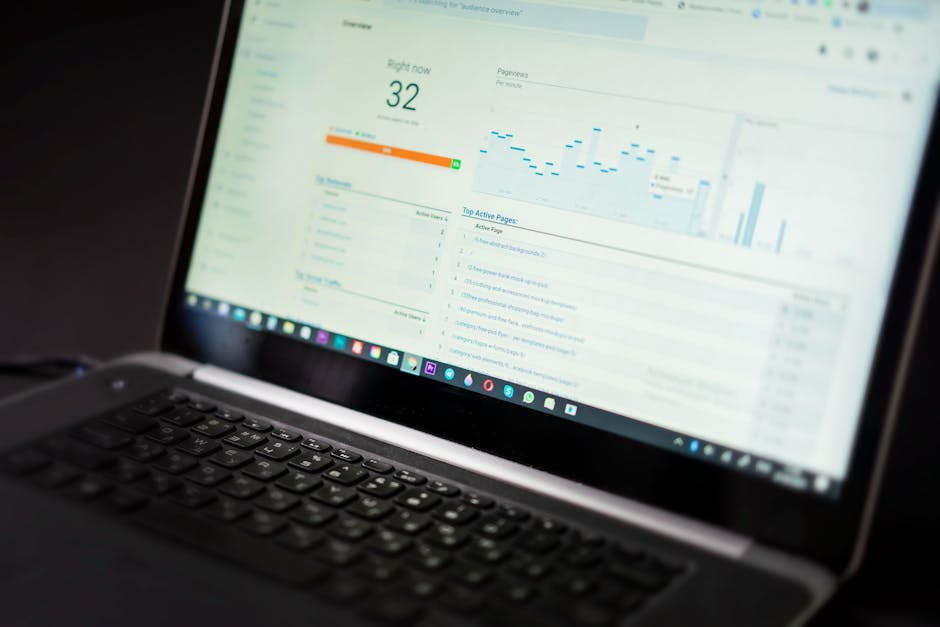
Start by installing basic analytics, such as [Google Analytics](https://marketingplatform.google.com/about/analytics/), and setting up conversion tracking for your main actions. In many tools, that can be as simple as marking your thank-you pages as conversion goals or adding event tracking to your form submissions. The goal is to answer a few simple questions: How many people visit my site? Which pages do they see? Which pages lead to the most form submissions or bookings? And which traffic sources—such as Google search, social media, or paid ads—produce those conversions?
Once you can see this data, you can start running small, focused tests. A/B testing, where you compare two versions of a page or element, is built into many landing page and popup tools like Unbounce and opt-in focused platforms. You might test two different headlines, two different images, or a short vs. longer explanation of your offer. The important thing is to change one major element at a time and give the test enough traffic to reach a useful conclusion. Industry benchmarks like the [Unbounce conversion rate report](https://unbounce.com/average-conversion-rates-landing-pages/) show that while average landing page conversion rates hover in the low-to-mid single digits, the top performers often double or triple that by iterating on copy and structure rather than chasing gimmicks.
Beyond quantitative metrics, you should also gather qualitative feedback about lead quality. Sit down regularly with whoever handles sales or service and review a sample of recent leads from your website. Are they the right type of customer? Do they understand what you offer, or are there consistent misconceptions? Are they providing enough detail for you to respond quickly with a useful quote? If many leads are unqualified or confused, that is a sign your on-page messaging or form questions need adjustment. For instance, adding a required budget range field or clarifying which locations you serve can filter out people who would never be a good fit.
You can also refine your follow-up workflows based on this feedback. If you notice that leads who receive a same-day response convert at a much higher rate than those who wait two days, you might adjust your automations and staffing to make rapid follow-up the default. If people often ghost after an initial quote, a simple reminder email a few days later, or a short FAQ email addressing common concerns, can bring some of them back. Each of these tweaks is manageable within a no-code ecosystem, especially if you keep your tools minimal and your goals clear.

Over time, this habit of tracking, testing, and refining will compound. Instead of hoping your site works, you will know roughly how much traffic it needs to generate a certain number of leads, and how changes to copy, design, and workflow impact those numbers. At that point, a no-code website for small business lead generation stops being just a project you completed and becomes an asset you manage. When you are ready to go deeper, pairing this approach with resources on landing page builders and AI website builders will give you a broader set of tools to keep improving results.
## Bringing It All Together
A no-code website for small business lead generation is not about having the fanciest design or the most tools plugged in. It is about turning your site into a simple engine that consistently nudges visitors toward clear, measurable actions—like requesting a quote, booking a call, or joining your email list—and then making it easy for you to follow up.
If you boil this guide down to the essentials, there are a few ideas to keep in mind. First, move away from the “online brochure” mindset and decide what you actually want visitors to do. Second, use a no-code builder so you can manage pages, forms, and small experiments yourself instead of waiting on a developer. Third, keep each key page focused: a clear promise, strong social proof, and one primary call to action, supported by short, low-friction forms or booking tools. Fourth, connect everything to your CRM and email so every inquiry lands in the right place and gets a timely response. Finally, keep an eye on your numbers and be willing to test small changes rather than chasing complete redesigns every few years.
You do not have to implement everything at once. A practical way forward is to pick one page and one goal to improve over the next couple of weeks. For most small businesses, that is the home page or a core service page with a single, clear action like “Get a quote.” Rewrite the headline so it spells out who you serve and what result you deliver, tighten the copy below it, simplify your form to the minimum useful fields, and make sure submissions trigger a clear thank-you page and an automatic confirmation email. Once that flow feels solid, you can extend the same pattern to additional landing pages and start experimenting with multi-step forms, popups, and basic A/B tests.
If you are already using a landing page or AI website builder, the next step might simply be to connect the dots: make sure those tools are integrated with your CRM, that your analytics is tracking form completions properly, and that someone on your team owns follow-up within a set time frame. From there, improving your lead generation becomes an ongoing habit rather than a one-off project. The tools will keep evolving, but the core approach—clear offers, easy actions, and consistent follow-through—will keep working for your business for a long time.